TL;DR: If a tree falls on your house, stay clear of downed power lines and anything that looks unstable, and evacuate if you smell gas or see sparking wires. Call 911 or your utility company first for any electrical hazard, then your homeowners insurer to open a claim, then a restoration contractor for emergency tarping and structural drying. In most cases your own homeowners policy pays for the repair even if the tree came from a neighbor’s yard, because California generally looks at whether the tree was healthy, not whose property it started on.
Maybe it happened during last night’s wind event, or a branch that had been leaning over the roof for two summers finally let go. Either way, you’re standing in your yard right now looking at a hole in your roof, a cracked ceiling, or a limb resting on your car, and you need to know what to do in order, not a list of maybes. Here is the sequence that actually protects you and your house in the first 24 hours.
Is It Safe to Go Near a Tree That Fell on Your House?
Treat any downed tree touching your house as a hazard until you’ve ruled out electrical and structural danger. Don’t walk under the tree, don’t touch it, and don’t send anyone onto the roof.
Check for a power line in contact with the tree or the house. If you see a line down, sparking, or hear buzzing, stay at least 35 feet back and call 911 immediately, then call your utility provider (PG&E for much of the Bakersfield area) to report it. Never attempt to move a branch that’s touching a line, even with a dry wooden tool.
Look at the house itself before going inside. A sagging ceiling, a roofline that’s visibly pushed down, cracked walls near the point of impact, or a door that suddenly won’t open or close are all signs the structure may be compromised. If you see any of these, get everyone out and wait for a professional assessment. If the tree broke through into an occupied room, or you smell gas, evacuate the house entirely and call 911 from outside.
If none of that applies, you can safely move through the rest of the house to check for water intrusion, since a punctured roof lets rain in fast even if the structural damage looks minor.
Who Do You Call First After a Tree Falls on Your House?
Call in this order: emergency services or your utility company for any hazard, then your insurance company to open the claim, then a restoration contractor for emergency tarping and drying. Each call does a different job, and doing them out of order either delays safety response or delays getting the damage stopped.
1. 911 or your utility company. This is only for immediate hazards: downed lines, gas odor, a structure that looks like it could collapse further. If there’s no active hazard, skip straight to step two.
2. Your homeowners insurer. Report the loss the same day if you can. Most carriers have a 24-hour claims line. Take photos of the tree, the point of impact, and any interior damage before anything is moved, since adjusters rely heavily on that first set of images.
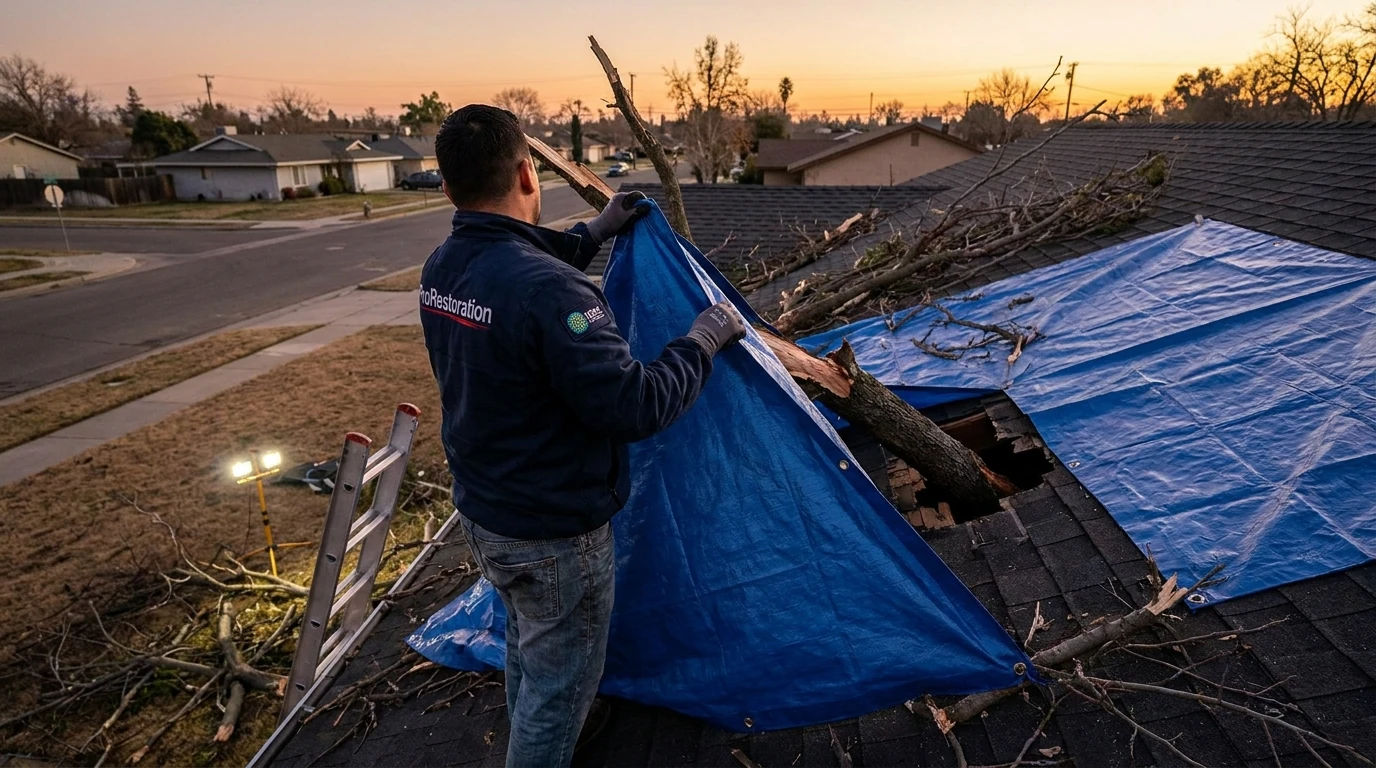
3. A restoration contractor for emergency tarping and structural drying. A tarped roof or boarded window stops the damage from getting worse while the claim is processed, and most policies expect you to take this step rather than wait. ProRestoration Services answers 24/7 and can get a tarp on a damaged roof section and start pulling moisture readings the same visit, so the loss doesn’t turn into a mold problem on top of the tree damage. If the impact also cracked a supply line or vent stack in the attic, which happens more often than people expect, our sister company All Pro Plumbing handles that repair as part of the same visit. One Call Does It All means you’re not coordinating a plumber, a restoration crew, and a roofer separately.
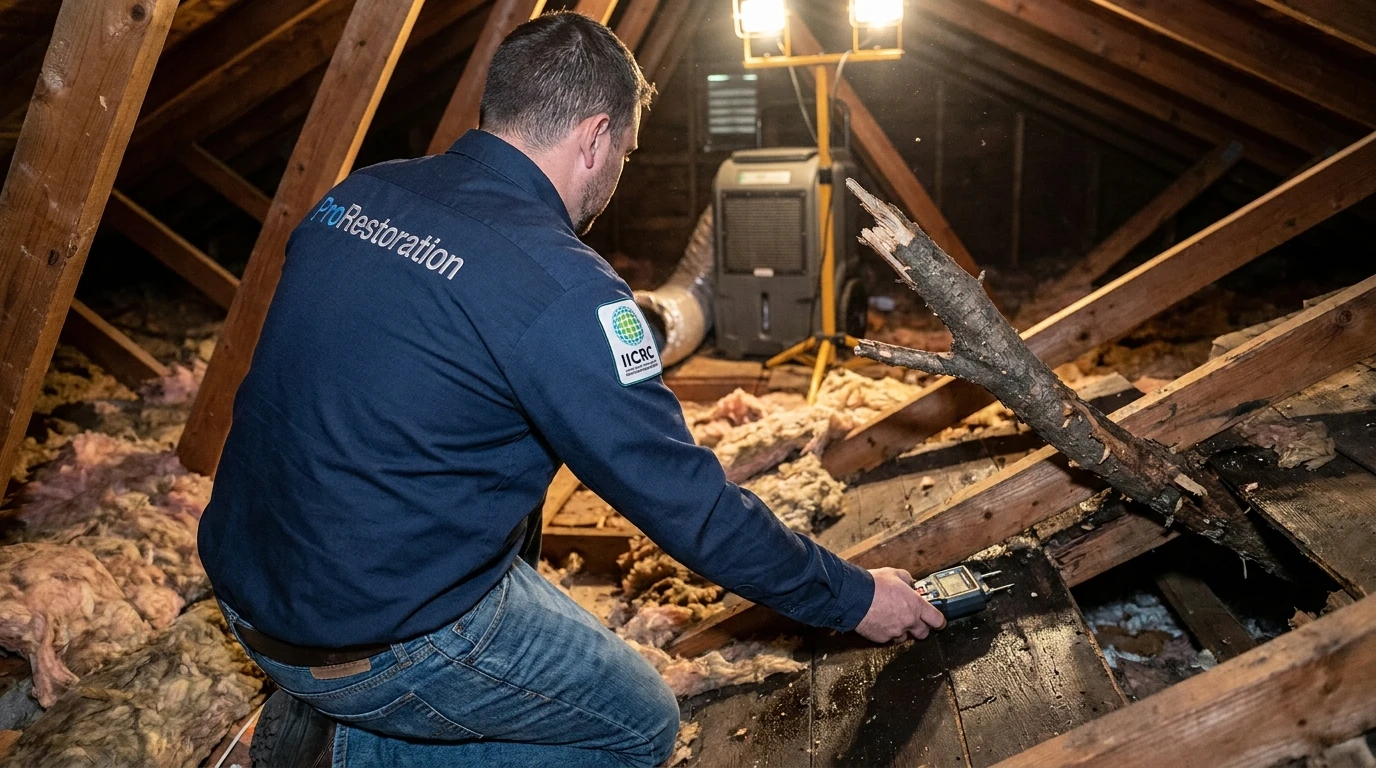
A licensed IICRC-certified contractor follows the S500 standard for structural drying, which is the industry benchmark insurers and adjusters recognize when reviewing a mitigation invoice.
My Neighbor’s Tree Fell on My House, Who Pays?
In California, it generally comes down to whether the tree was healthy before it fell, not whose yard it was rooted in. If a neighbor’s apparently healthy tree came down in a storm, that’s typically treated as an act of nature, and your own homeowners policy covers your damage through your dwelling and debris-removal coverage.
The calculus changes if the tree was visibly dead, diseased, or had a known defect the neighbor ignored despite a prior complaint or warning. In that situation, their liability insurance may be responsible, and in rare cases their negligence can affect your claim. This is a fact-specific legal question, not a restoration one, so don’t rely on informal advice (including this post) to settle it. Report the loss to your own insurer regardless of fault, since your policy is usually the fastest path to getting repairs started, and your carrier can pursue subrogation against the neighbor’s insurer later if negligence applies.
Document the tree’s condition before cleanup if you can safely photograph it: trunk condition, visible rot, prior storm damage. That record matters if there’s a dispute later.
What Happens During Emergency Tarping and Structural Drying?
Emergency tarping seals the opening within hours of the crew’s arrival, and structural drying begins the same visit to stop secondary damage like swelling wood and mold growth. The two steps happen together, not weeks apart.
A crew first removes loose debris around the impact point, assesses how far water has already traveled (often further than the visible hole, especially along ceiling joists), and installs a reinforced tarp or plywood over the opening, rated to hold through additional wind. Inside, they pull moisture readings on drywall, insulation, and framing with a penetrating moisture meter, then set air movers and a dehumidifier sized to the affected area. Drying typically runs 3 to 5 days depending on how much water got in before the tarp went up, with daily moisture checks to confirm the material has returned to a dry standard before any rebuild starts.
Once the structure is dry, the rebuild (new roof decking, drywall, insulation, sometimes a full section of framing) moves into reconstruction, which is a separate phase from mitigation and usually requires its own insurance scope approval.
If you’re mid-claim and unsure what the adjuster’s scope should include, our storm damage insurance claim checklist walks through what to document before the crew arrives.
A fallen tree is a fast-moving problem that turns into a slow, expensive one if the opening sits uncovered. Getting a tarp on the roof and air moving through the affected rooms within the first day is what keeps a storm claim from becoming a mold claim. Request a storm damage assessment once the hazard is cleared and the insurer is notified.
About ProRestoration Services
ProRestoration Services is an IICRC-certified restoration company licensed with the Contractors State License Board (CSLB License #960566), serving Bakersfield and Kern County 24/7. Alongside water, fire, mold, and storm damage restoration, the company works with sister company All Pro Plumbing so a single call covers the emergency tarping, structural drying, plumbing repair, and rebuild. Call ProRestoration Services at (661) 393-9306 to reach the 24/7 line.