TL;DR: Storm damage to a roof usually shows up as missing or lifted shingles, granules collecting in the gutters, bent flashing, or a new water stain spreading across a ceiling after a windstorm. Tarp any active leak within 24 to 48 hours, before water soaks through the decking and reaches drywall and insulation. Most homeowners policies cover sudden wind damage, but you need dated photos and a written repair scope before you sign anything with an adjuster or a contractor.
If you just walked outside after a windstorm and found shingles in the yard, or you’re staring at a brown ring forming on your bedroom ceiling, the clock already started. A damaged roof doesn’t stay a roof problem for long. Within a day or two, that same leak becomes a ceiling problem, a drywall problem, and eventually a mold problem. Here’s how to spot the damage, stop it from spreading, and get it paid for.
What Does Storm Damage to a Roof Actually Look Like?
Storm damage usually shows up as missing, curled, or lifted shingles, granule loss in the gutters, and bent flashing around chimneys, vents, or skylights before any water ever reaches the inside of the house. The exterior clues almost always come first.
Walk the perimeter of the house and look up, don’t climb up, after any wind event. Look for shingles that are visibly out of line with the row around them, bare or shiny patches where the protective granules have worn away, and dented metal on vent caps or gutter guards. Soft spots in the roofline, sagging in the eaves, or daylight visible through the attic when the sun hits at an angle are all signs the decking underneath has already failed.
In Kern County, roof storm damage is rarely a hail story. It’s wind. A hard Bakersfield wind event or a winter atmospheric river can lift a row of shingles or drive rain sideways under flashing that’s held up fine for years, especially on older homes around Oildale and East Bakersfield with original roofing. Once wind has lifted even a few shingles, the next rain finds the gap.
How Do You Tarp a Roof After Storm Damage?
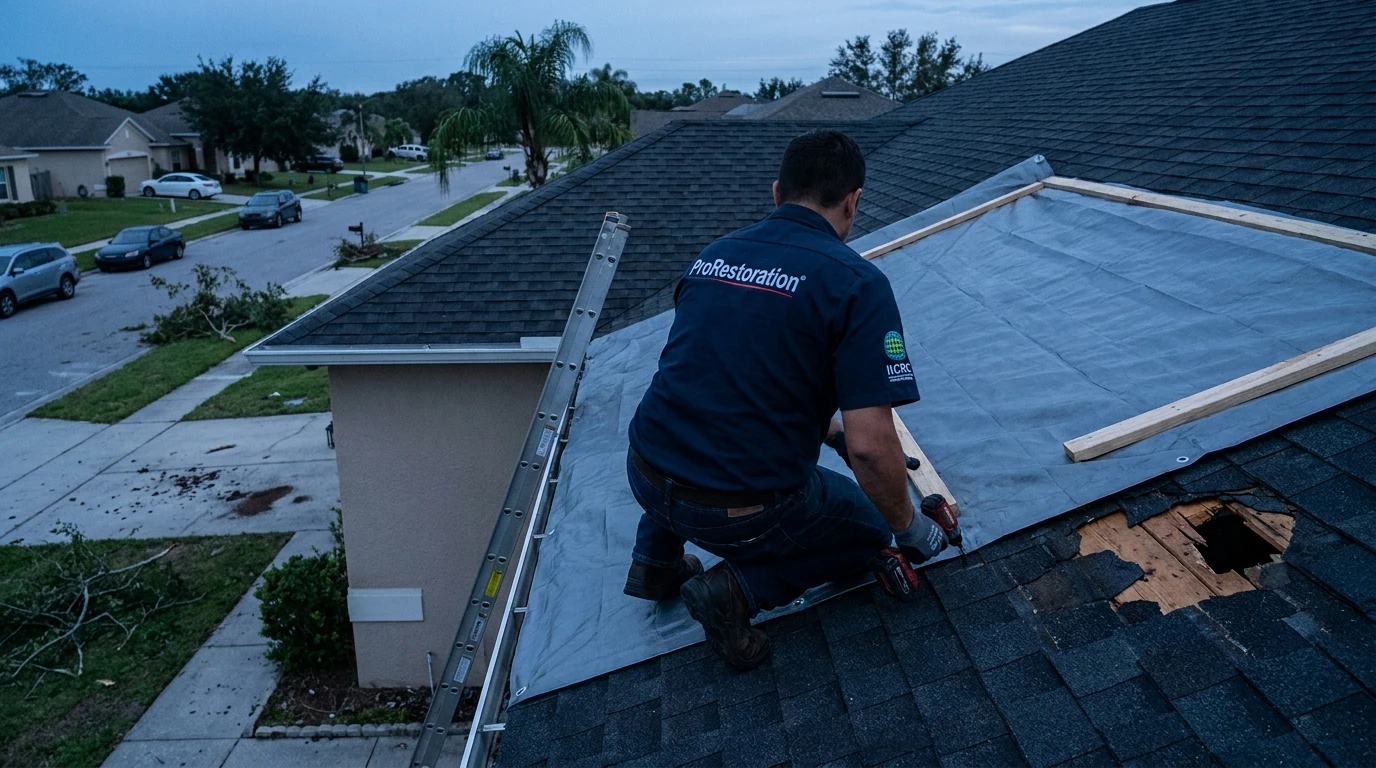
Tarping a roof means covering the damaged section with heavy-duty plastic sheeting that extends well past the visible damage and is anchored so wind can’t rip it loose. Done right, it buys you days to weeks before a permanent repair, not a fix in itself.
- Photograph everything first. Take wide shots of the whole roof slope and close-ups of the damaged area before anyone touches it. Insurers want to see the damage as the storm left it.
- Only clear debris you can reach safely from the ground or a stable ladder. A wet or wind-damaged roof is not the place to improvise.
- Use a tarp rated for roofing, not a tent tarp. A 6-mil poly tarp or a reinforced roofing tarp should extend at least 4 feet beyond the damaged area on every side, and run over the ridge line if the damage is near the top of the slope.
- Anchor it with furring strips screwed through the tarp into the roof deck, or sandbags along the edges. Bricks alone will not hold a tarp through another wind event.
- If the damage is on a steep pitch, over a second story, or involves broken trusses, call a professional crew instead of climbing up there yourself. A 24/7 board-up and tarping call is exactly what that service exists for, and getting it done within 24 to 48 hours is the difference between a roof repair and a full interior rebuild.
Will Homeowners Insurance Cover Roof Storm Damage?
Most standard homeowners policies cover roof damage from wind, as long as it’s sudden and accidental rather than the result of age or deferred maintenance. The insurer is looking for evidence the storm caused the failure, not that the roof was already on its last legs.
That distinction matters because adjusters routinely deny claims where a 20-year-old roof shows signs of pre-existing wear alongside the storm damage. Dated photos from before and after the event, a copy of the weather report or NOAA storm data for that date, and a written scope of repair from a licensed contractor all strengthen a claim. Check whether your policy pays actual cash value or replacement cost for the roof, since that affects how much you collect after depreciation.
If you haven’t filed yet, our storm damage insurance claim checklist walks through exactly what to document before you call your carrier. And if the storm intrusion caused interior water damage, that’s a separate but related claim line, drying and repair of drywall, flooring, and insulation typically falls under the dwelling coverage for water damage, not the roof line item.
What Happens If You Wait to Fix a Storm-Damaged Roof?
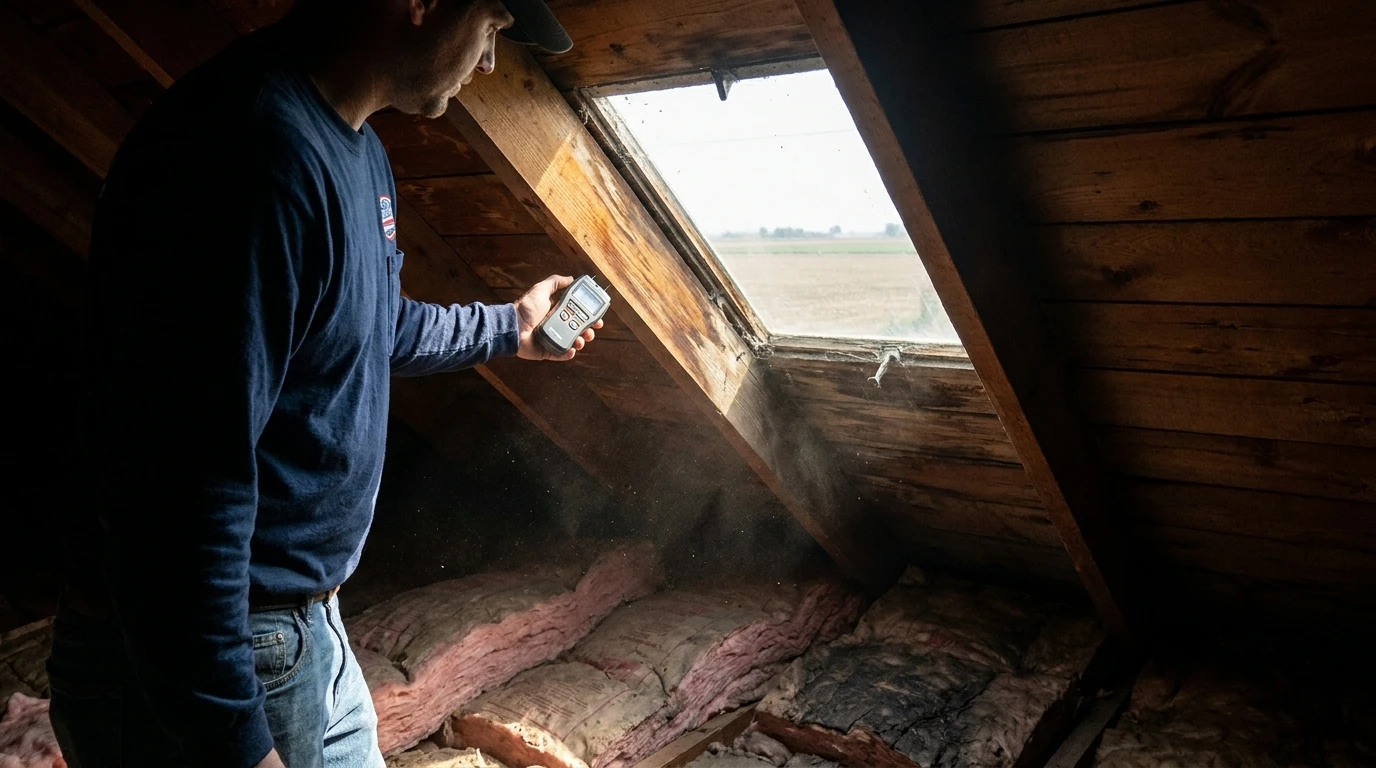
Waiting on a storm-damaged roof turns a contained exterior repair into an interior one, usually within 24 to 48 hours of the first leak reaching the attic. Wet insulation loses its R-value immediately and rarely dries back to spec, and wet drywall begins to sag and stain within a day.
Mold is the next concern. Visible growth can begin within 24 to 72 hours on wet drywall paper and insulation paper facing, according to guidance from the EPA on moisture and mold. In the Central Valley’s summer heat, drying times inside a sealed attic can actually move faster once airflow is restored, but a leak that sat through a winter storm cycle without anyone catching it is a different story entirely.
The other cost of waiting is scope creep on the insurance side. Adjusters distinguish between damage that happened during the storm and damage that happened because repairs were delayed. A roof tarped within 48 hours and dried properly tells a very different story to an adjuster than ceiling drywall that’s been softening for two weeks.
A roof leak rarely stays a roof problem. Once water gets past the decking, it’s a drying and reconstruction job, and that’s where having one team handle the whole thing starts to matter. ProRestoration Services tarps the roof, dries out the attic and ceiling with the same crew, and rebuilds the drywall and framing when it’s time, instead of handing you off between a roofer, a water mitigation company, and a general contractor. If the storm also knocked something loose on the plumbing side, a cracked vent stack or a line jarred in the attic, our sister company All Pro Plumbing is the same call, the same crew, no second contractor to coordinate. One call does it all.
About ProRestoration Services
ProRestoration Services is an IICRC-certified, EPA Lead-Safe certified restoration company serving Bakersfield and Kern County under CSLB license 960566. Their crews handle storm damage restoration, water damage restoration, emergency board-up and tarping, and full reconstruction, working alongside sister company All Pro Plumbing so storm-related plumbing failures and the resulting water damage are handled by one team.