TL;DR: Mold remediation in Bakersfield typically costs between $500 for a small bathroom spot and $15,000 or more for whole-house remediation after a slab leak. Most jobs fall in the $1,500 to $7,000 range. Price depends on square footage, containment needs, and whether flooring or drywall must come out. Homeowners insurance covers mold only when it traces to a sudden, covered water event, not a long-term leak or humidity problem.
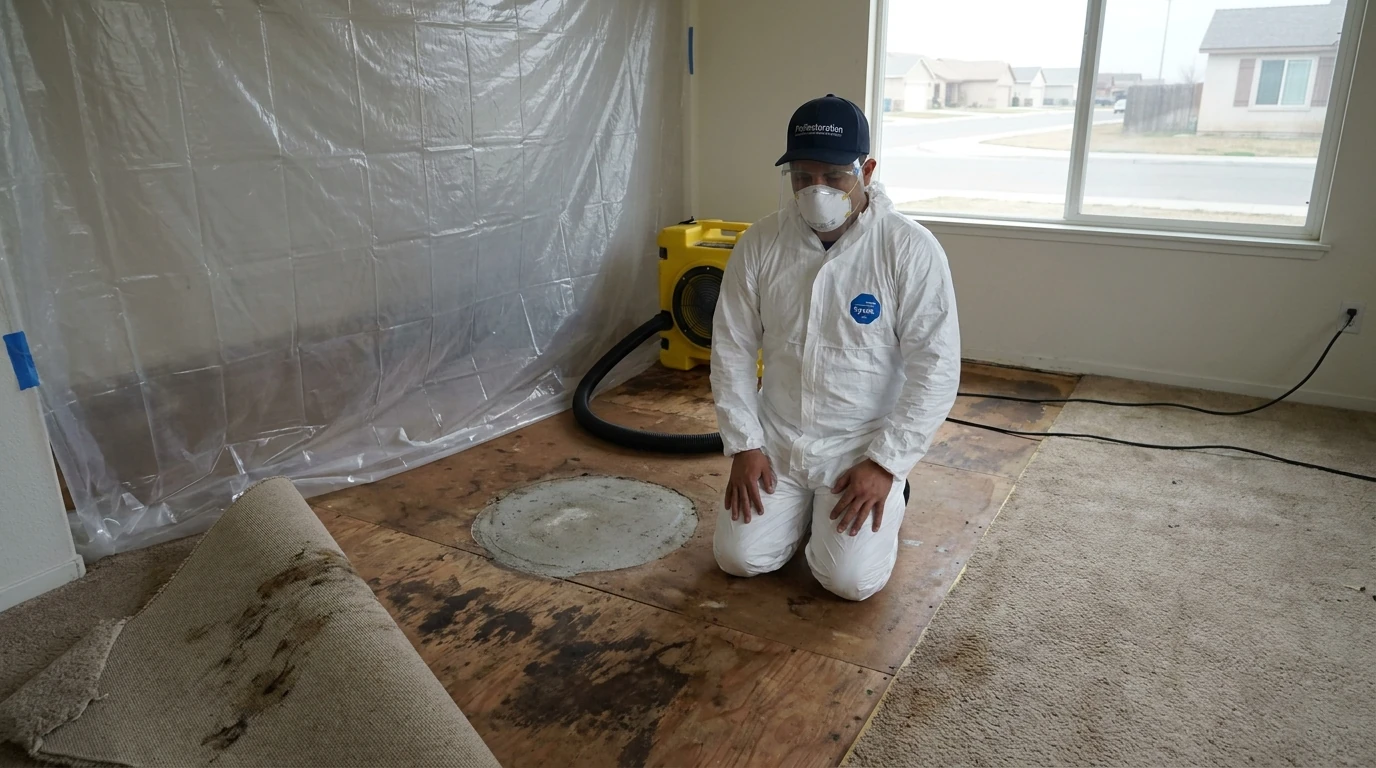
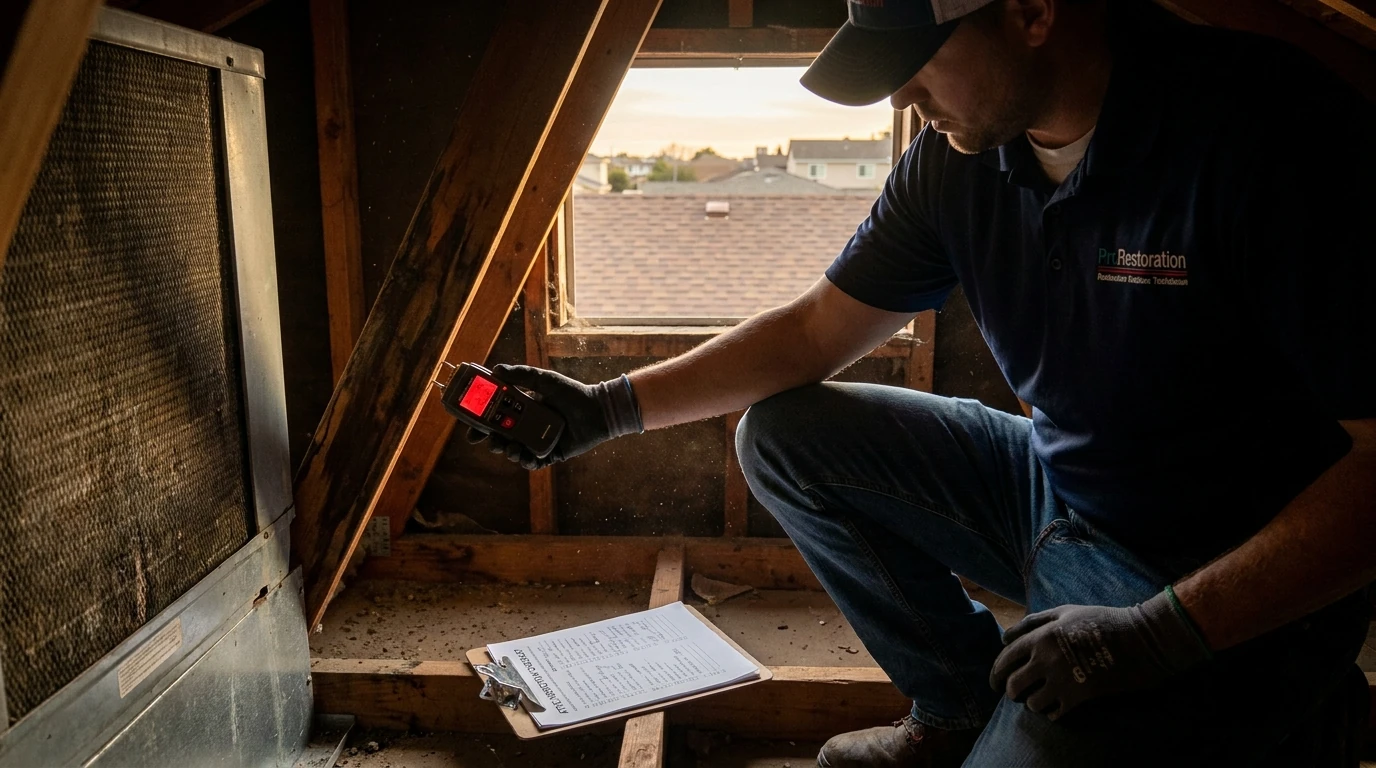
If you just pulled up a corner of carpet near a slab leak and found a dark, musty patch underneath, or you climbed into the attic after your swamp cooler quit and saw staining on the rafters, you’re probably trying to figure out what this is going to cost before you call anyone. Bakersfield’s slab-on-grade construction and hard water make slab leaks a common mold trigger, and aging evaporative coolers push moisture into attics and ceilings every summer. Here’s what remediation actually runs, and what changes the number.
How much does mold remediation cost in Bakersfield, CA?
Most Bakersfield homeowners pay between $1,500 and $7,000 for mold remediation, with small isolated spots costing under $1,500 and whole-house jobs after major water intrusion running $8,000 to $15,000 or more. The table below breaks down typical scenarios.
| Scenario | Typical Cost Range |
|---|---|
| Small bathroom spot (under 10 sq ft, tile or grout) | $500 - $1,500 |
| Wall or ceiling section (10-30 sq ft) | $1,500 - $4,000 |
| Whole-room remediation with containment | $3,000 - $7,000 |
| Crawl space mold remediation | $2,500 - $6,000 |
| Attic mold from a swamp cooler leak | $2,000 - $5,500 |
| Whole-house remediation after a slab leak | $8,000 - $15,000+ |
Mold inspection and air or surface testing are usually billed separately from remediation, typically $300 to $800, and most companies apply that fee toward the remediation cost if you move forward.
What factors change the price of mold remediation?
The biggest cost drivers are square footage affected, containment requirements, and how much material has to be removed rather than cleaned. A 5-square-foot spot behind a toilet costs far less than mold that has spread through wall cavities and insulation.
Other factors that move the number in Bakersfield specifically:
- Source of moisture. Mold from a slab leak often means pulling flooring and sometimes cutting into the slab area, which adds cost beyond the mold work itself.
- Accessibility. Crawl space and attic mold, both common here from aging swamp coolers and older plumbing, cost more per square foot because of tight working conditions and the need for full-suit PPE.
- Containment level. Larger jobs require sealed plastic containment and negative air machines to keep spores from spreading to the rest of the house, which adds labor and equipment time.
- Materials removed. Drywall, insulation, and carpet padding are usually a straight tear-out and replace. Hard surfaces like tile and concrete can sometimes be cleaned and treated instead.
- Testing and clearance. A third-party clearance test after the work, confirming spore counts are back to normal, adds a few hundred dollars but is worth it for insurance documentation and peace of mind.
If you’re not sure whether what you’re looking at is actually mold or just staining, how to test for mold in your home walks through DIY kits versus a professional inspection, and 7 signs you have hidden mold covers what to look for behind walls and under flooring before you call anyone.
Does homeowners insurance cover mold remediation?
Homeowners insurance covers mold remediation only when the mold resulted from a sudden, covered event, like a burst pipe, not from a slow leak or long-term humidity. California insurers typically cap mold coverage at a sublimit, often $1,000 to $10,000, even on policies that cover the underlying water damage fully.
That means if a supply line bursts behind your washing machine and mold develops within a few days because it wasn’t caught right away, there’s a reasonable chance the water damage portion is covered under your dwelling coverage while the mold cleanup itself is capped or excluded depending on your policy’s wording. If the mold grew slowly from a swamp cooler drip over months, most insurers will deny the claim outright, categorizing it as a maintenance issue.
Documentation matters more than almost anything else in these claims. Photos of the original water event, moisture meter readings, and a written scope of work from the remediation company all strengthen a claim. For a deeper look at how water damage claims typically play out in California, see does homeowners insurance cover water damage.
What does the mold remediation process actually involve?
Mold remediation follows a sequence set by the IICRC S520 standard: inspect, contain, filter, remove, treat, and verify. Skipping steps is usually why DIY attempts fail and mold comes back.
- Inspection and moisture mapping. A technician identifies the mold source, extent, and the moisture problem feeding it, often with a moisture meter and sometimes air sampling.
- Containment setup. Plastic sheeting seals off the work area so spores don’t spread to unaffected rooms during demolition.
- Negative air filtration. HEPA air scrubbers run continuously, pulling airborne spores out of the contained space.
- Removal of affected materials. Drywall, insulation, carpet, or flooring that can’t be cleaned gets bagged and removed following containment protocols.
- Cleaning and antimicrobial treatment. Remaining surfaces are HEPA vacuumed and treated to prevent regrowth.
- Clearance testing. A final air or surface test confirms spore counts are back to normal before containment comes down.
- Reconstruction. Drywall, flooring, and trim get rebuilt to match the original space.
The EPA’s mold cleanup guidance and the California Department of Public Health’s mold FAQ both note that fixing the moisture source is just as important as removing the mold itself, otherwise it returns.
Who should you call for mold remediation in Bakersfield?
For mold tied to a plumbing failure, like a slab leak or a burst supply line, the most efficient path is a company that handles both the plumbing repair and the mold remediation under one roof, so you’re not coordinating two separate contractors while mold keeps spreading. ProRestoration Services works alongside its sister company, All Pro Plumbing, meaning the leak gets fixed and the mold gets remediated by one coordinated team instead of a plumber, a mold company, and a general contractor all pointing fingers at each other.
If the mold is isolated and the moisture source is already resolved, like an old bathroom fan that’s since been fixed, a straightforward remediation quote without a plumbing component is usually all you need. Either way, get a written scope before work starts and ask whether clearance testing is included in the price.
If you’ve found mold after a slab leak, a swamp cooler drip, or standing water that sat too long in this valley heat, a written scope with the moisture source identified protects both your home and any insurance claim you file. Call ProRestoration Services at (661) 393-9306 to schedule an assessment.
About ProRestoration Services
This post was written with the ProRestoration Services team, led by Jack Bispo. ProRestoration Services is an IICRC-certified, EPA Lead-Safe Certified firm licensed with the Contractors State License Board (CSLB License #960566), serving Bakersfield and Kern County with a 4.8-star Google rating across 117 reviews. Their crews handle mold inspection and remediation alongside water damage, fire damage, and full reconstruction, working under the “One Call Does It All” model with sister company All Pro Plumbing for jobs that start with a plumbing failure.